From Data Centers to Factory Floors: Why Sensors and Physical AI Will Define the Next Predictive Reality

PHYSICAL AI · INDUSTRIAL AI · JUNE 2026 · ENERGY DOMINANCE | WEEK 25 · PART I
Bridging Energy-Efficient Cloud AI and Edge Computing to Embodied Intelligence on the Shop Floor, How Sensors, Digital Twins and Autonomous Systems Are Turning Data Constraints into Real-World Operational Advantage.
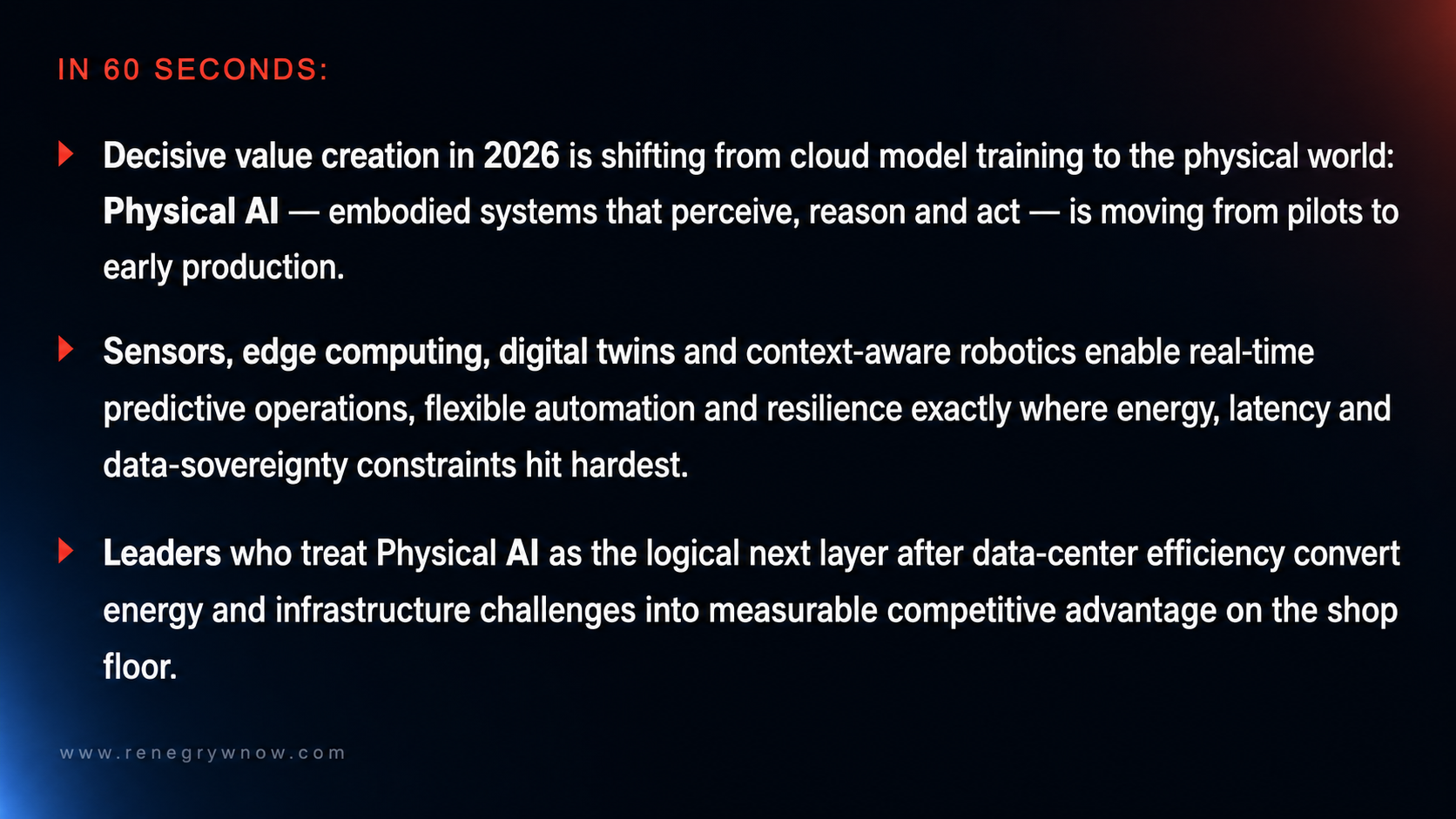
For two years, the energy story of AI was told in megawatts and cooling towers, a story that ended at the data-center fence line. But the next frontier of value creation does not live in the cloud. It lives on the factory floor, at the exact point where a sensor reads a vibration, an edge model decides, and a robot acts.
Efficiency Before Fuel was never only about ships or servers. It is about removing waste at the point of decision — and in 2026, that point is moving into the physical world. Latency, bandwidth cost and data sovereignty are no longer footnotes; they are the reason intelligence is migrating out of the cloud and onto the line.
This is Part I of Week 25: the bridge from energy-efficient cloud AI to embodied intelligence on the shop floor. Part II will turn to the autonomous systems and humanoid pilots scaling on top of it.
Executive Summary
1. From Centralized AI to Physical AI: The Migration to the Edge and Factory Floor
Cloud and data-center AI excel at training large foundation models, but inference and real-time decision-making are increasingly moving to the edge and physical systems. High-mix, high-variability manufacturing environments, typical for European and many global factories, cannot tolerate the latency, bandwidth costs and data-sovereignty risks of pure cloud architectures.
Physical AI combines advanced sensors, on-device/edge models and embodied agents (robots, cobots, autonomous mobile systems) that act directly in the physical world. The center of gravity moves from where the model is biggest to where the decision happens.
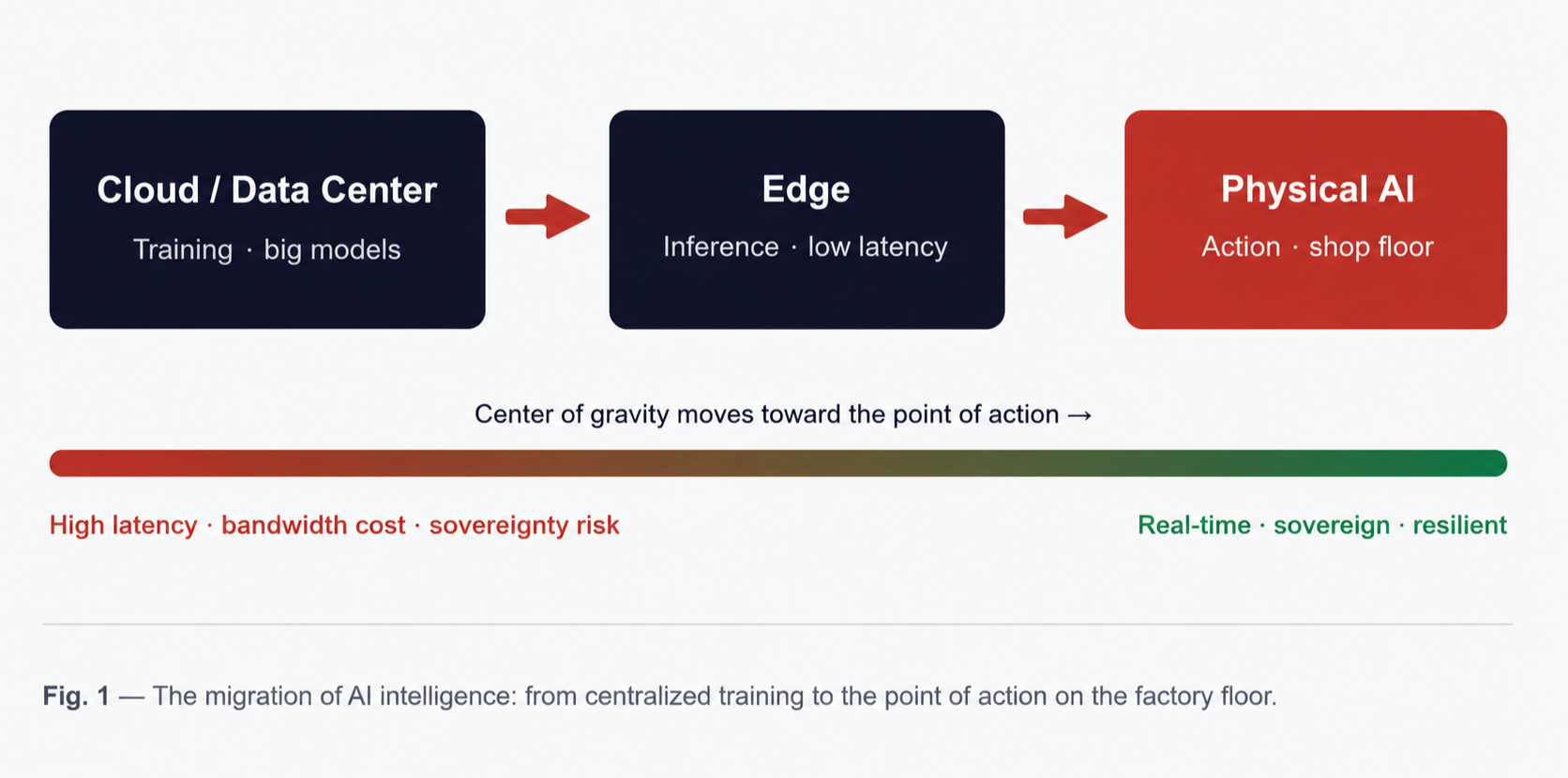
👉 Key Insight: The bottleneck is no longer model intelligence in the cloud, it is reliable, low-latency intelligence at the point of action on the shop floor.
2. Sensors, Embodiment and Real-Time Perception: The New Shop-Floor Reality
Modern Physical AI relies on multi-modal sensor fusion (vision, tactile/force, audio, LiDAR, IMUs) combined with world models and simulation-to-real transfer. This enables context-aware robots and machines that adapt to changing conditions without rigid reprogramming.
Digital twins, powered by platforms like NVIDIA Omniverse, allow training and validation in simulation before physical deployment, dramatically reducing risk and time-to-value. Embodiment turns AI from a passive analytics tool into an active participant in production, inspection, logistics and maintenance.
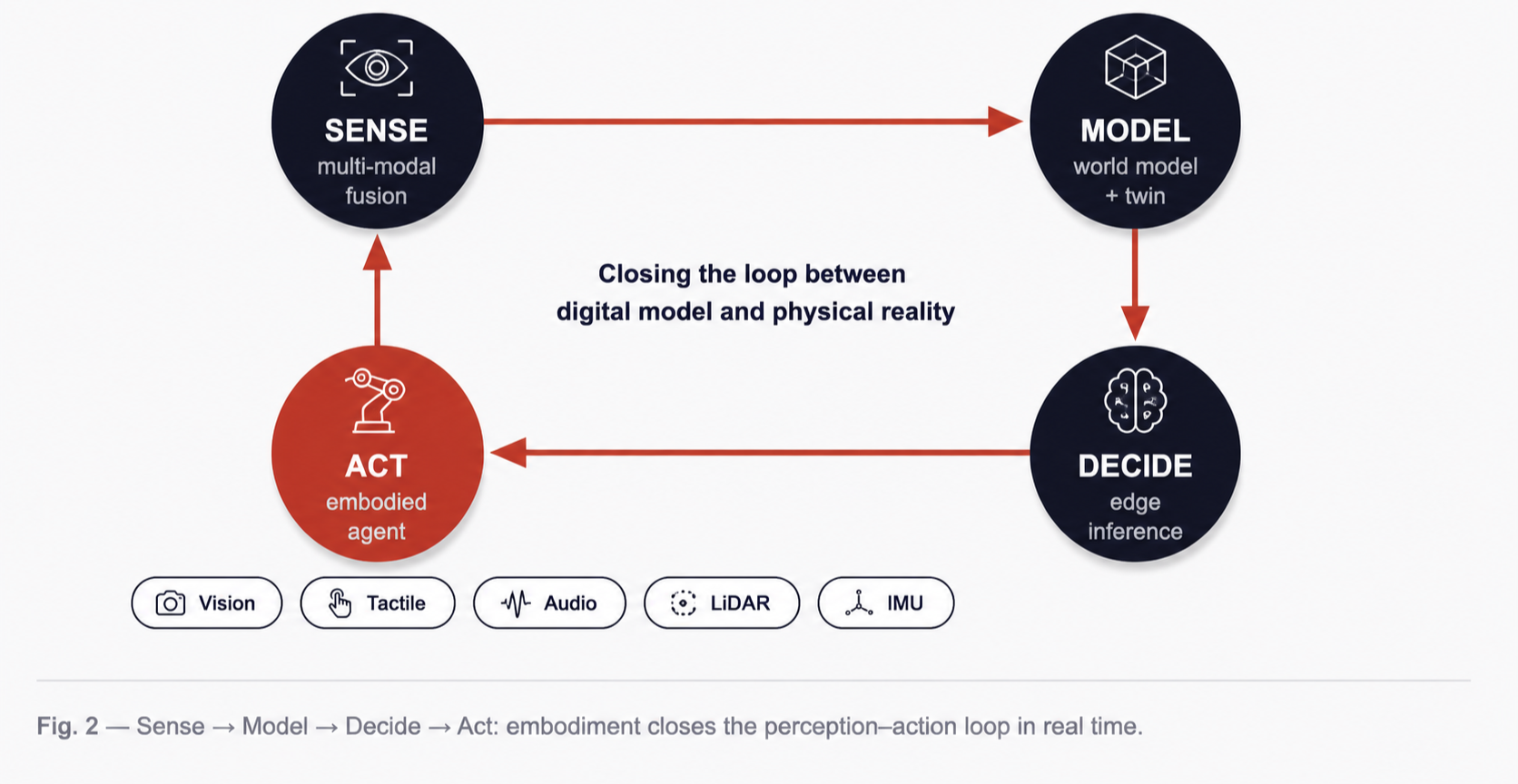
👉 Key Insight: Sensors + embodiment close the loop between digital models and physical reality, turning predictive maintenance and quality control from reactive into truly autonomous, self-optimizing processes.
3. Quantified Impact: Efficiency, Flexibility and New Operating Models
Market trajectory: the Physical AI market, embodied systems, AI-enabled industrial robotics, sensor fusion, is projected to grow from ~USD 5–6 billion in 2025/2026 to USD 80+ billion by 2035 (CAGR >30% across multiple 2026 forecasts).
Operational gains: early deployments show a 20–40% reduction in unplanned downtime via predictive maintenance, meaningful improvements in first-pass yield through real-time vision inspection, and higher flexibility in high-mix production without proportional cost increases.
Energy & infrastructure angle: edge/physical AI reduces data-transfer volumes and associated energy costs; photonic and efficient edge hardware (e.g. q.ant-style approaches) further lower power and cooling needs at the factory level. Humanoid and mobile robot pilots are scaling in 2026 across automotive, logistics and inspection.
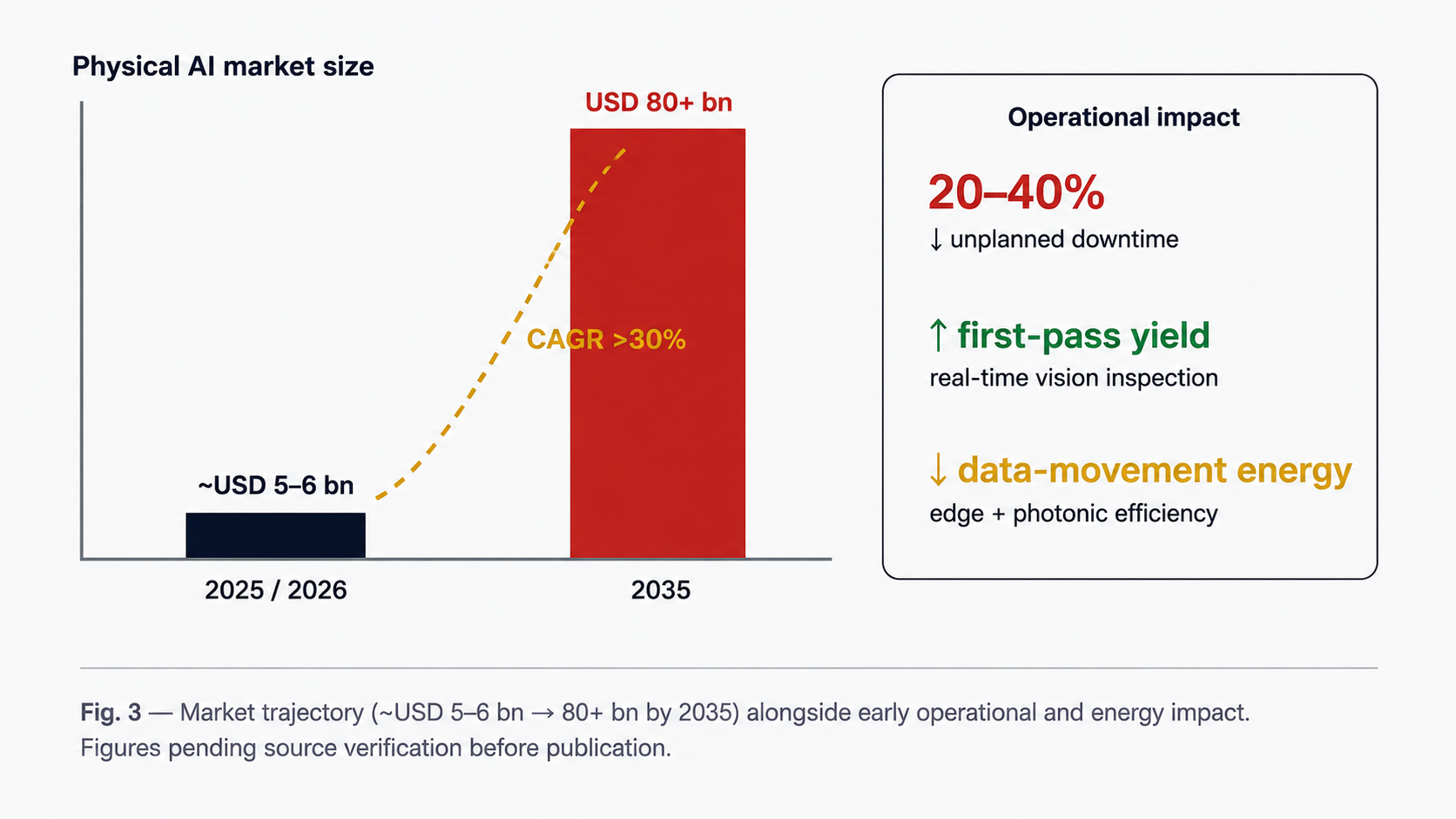
👉 Key Insight: Physical AI does not just optimize existing processes, it enables new operating models (autonomous cells, lights-out segments, resilient supply chains) that were economically or technically unfeasible with traditional automation.
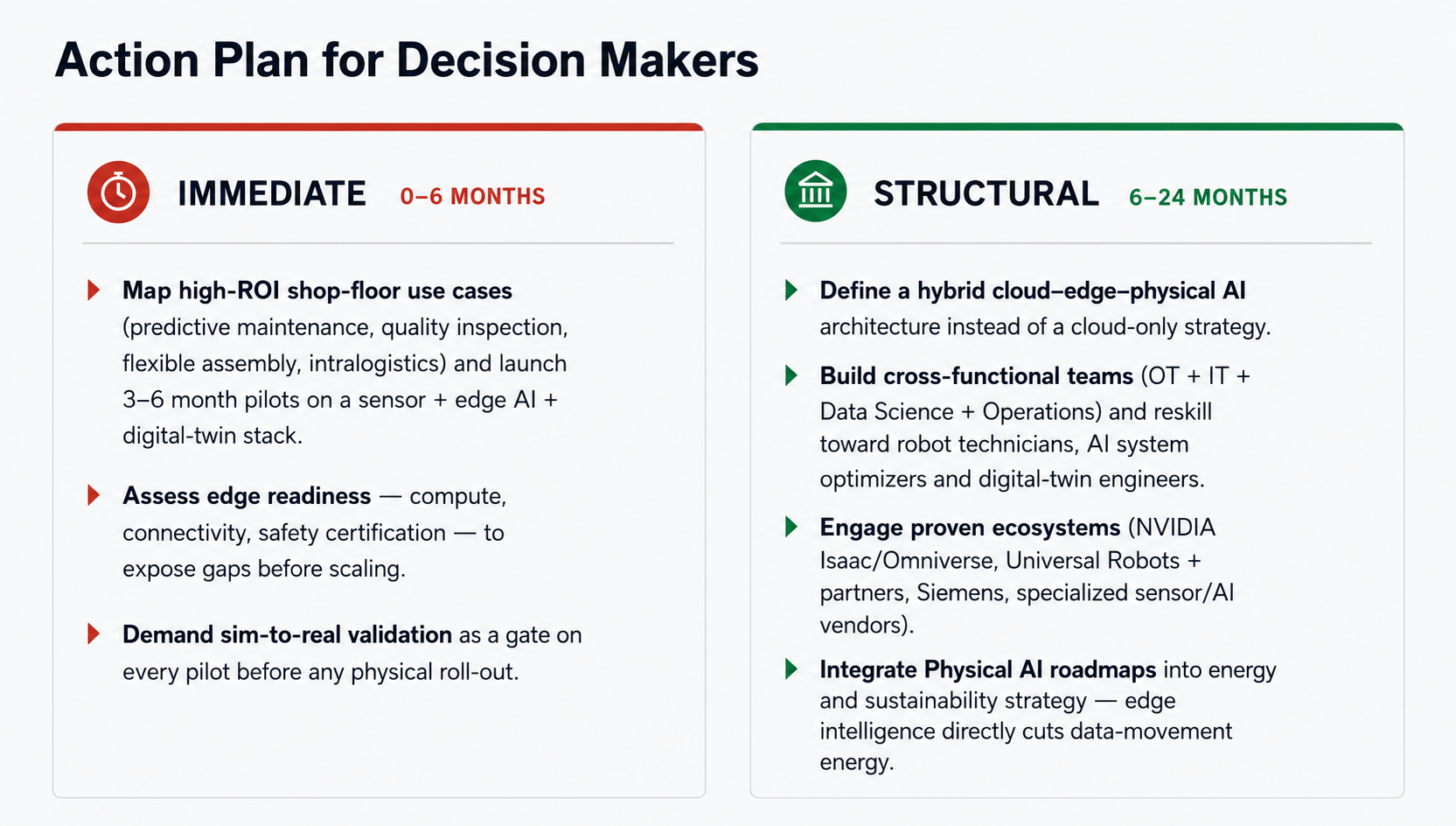
Action Plan for Decision Makers
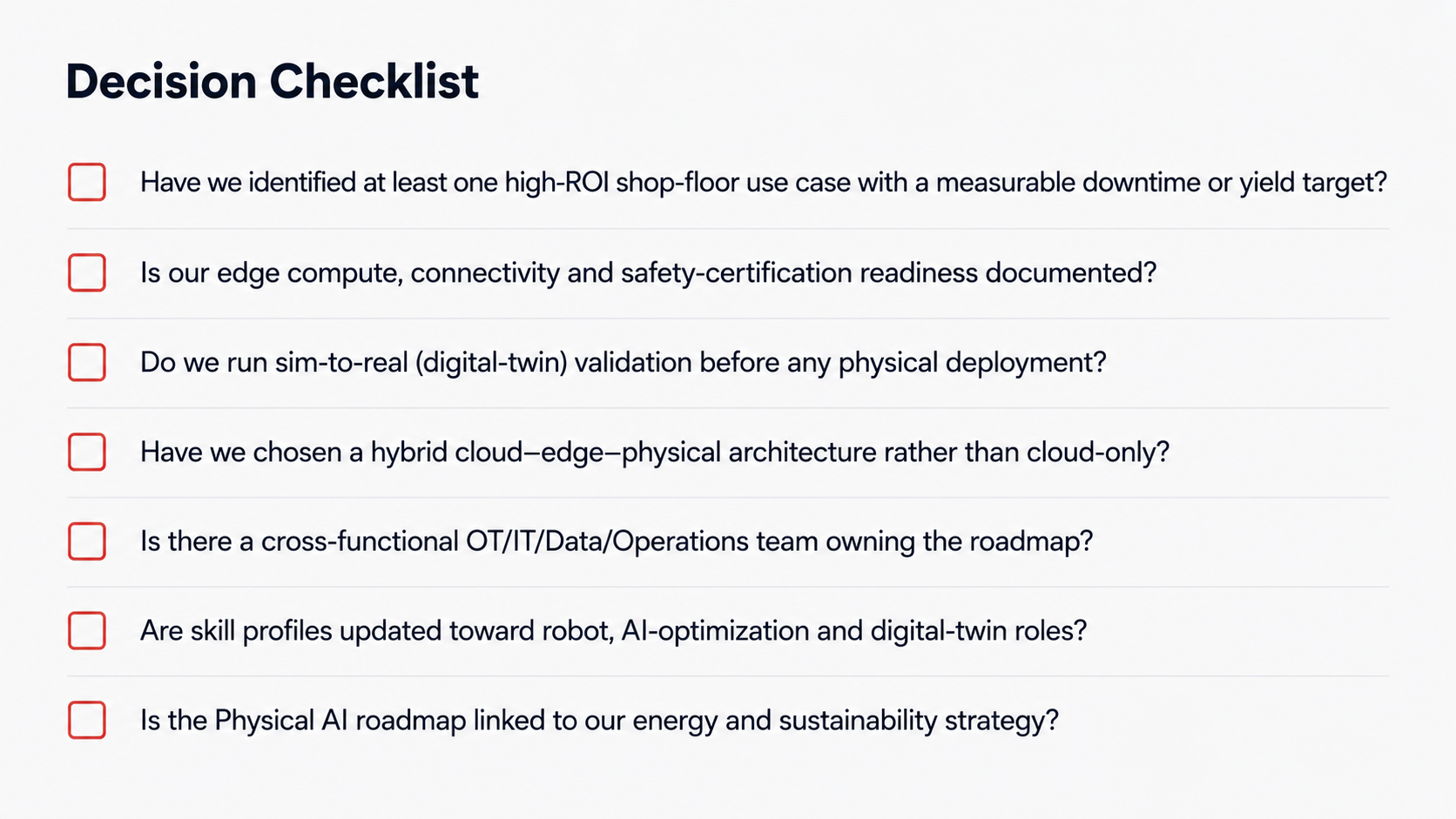
Decision Checklist
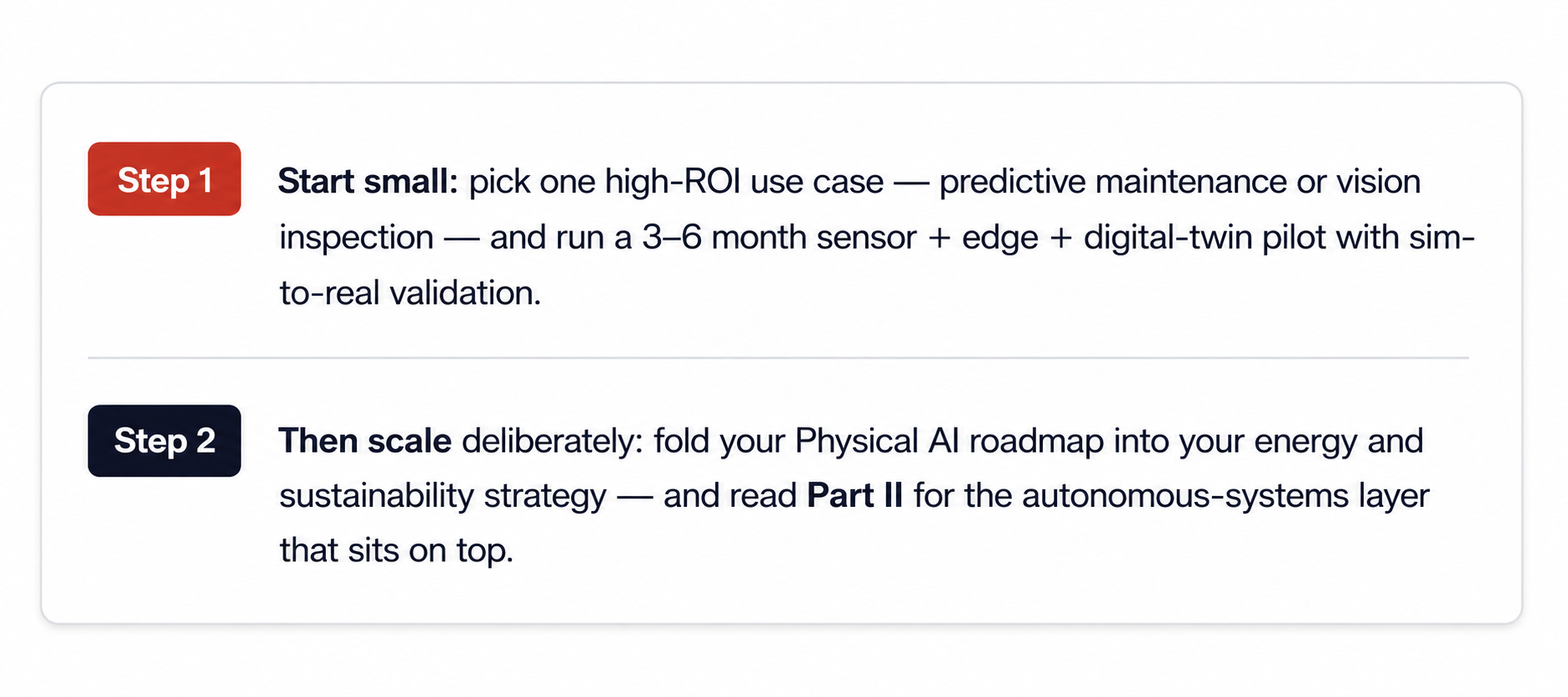
Final Thought
Physical AI will not be won by whoever owns the largest model. It will be won by whoever places reliable intelligence closest to the point of action, and treats every sensor, every edge node, every robot as a deliberate design choice rather than an afterthought. The constraints of energy, latency and data sovereignty are not obstacles to route around; they are the design brief. Ownership as Design means deciding, on purpose, where intelligence lives and what it is allowed to do.
Systems don't fail. Decisions do.
Take the Next Step
Subscribe to the Weekly Punch for weekly strategic clarity, direct to your inbox.
References
World Economic Forum (2025) Physical AI: Powering the New Age of Industrial Operations. White Paper.
Deloitte (2026) Tech Trends 2026: Physical AI & Humanoid Robots.
NVIDIA (2026) GTC 2026 Announcements: Physical AI Data Factory & Omniverse Blueprints.
Capgemini Research Institute (2026) Physical AI in Manufacturing.
q.ant (2025) Commercial Deployments & ISC 2025 Updates.
MarketsandMarkets, SNS Insider & Future Markets Inc. (2025) Physical AI Market Forecasts 2025–2035.
Universal Robots & Siemens (2026) Industrial Physical AI Platforms.
Hannover Messe (2026) Industry Deployments; automotive & logistics pilots.
Note: This article reflects my personalviews based on industry experience and publicly available information. It does not constitute professional, legal, or investment advice and does not represent the views of my employer. AI-generated visuals, concept and content by the author.
