Good Teams, Bad Teams in the Age of AI: Practical Lessons from Thurber & Miller Applied to Physical AI Organizations
LEADERSHIP | TEAM EFFECTIVENESS | AUGUST/SEPTEMBER 2026 | Week 35 · Part III
Why Team Dynamics Become Even More Critical When Humans and Intelligent Systems Must Collaborate, and How Leaders Can Build the Right Kind of Teams
Part I of this week's set named the activity trap. Part II showed why fixing one problem in an autonomous system can quietly create another. Part III asks who is actually in the room when those problems get caught — or missed.
Ownership as Design has always meant responsibility is built in, not assumed. Nowhere is that truer than in the team deciding, in real time, whether to trust what an agent just recommended.
Executive Summary
IN 60 SECONDS:
As organizations introduce AI Agents and autonomous systems, the quality of human teams becomes more, not less, important; technology amplifies both good and bad team dynamics.
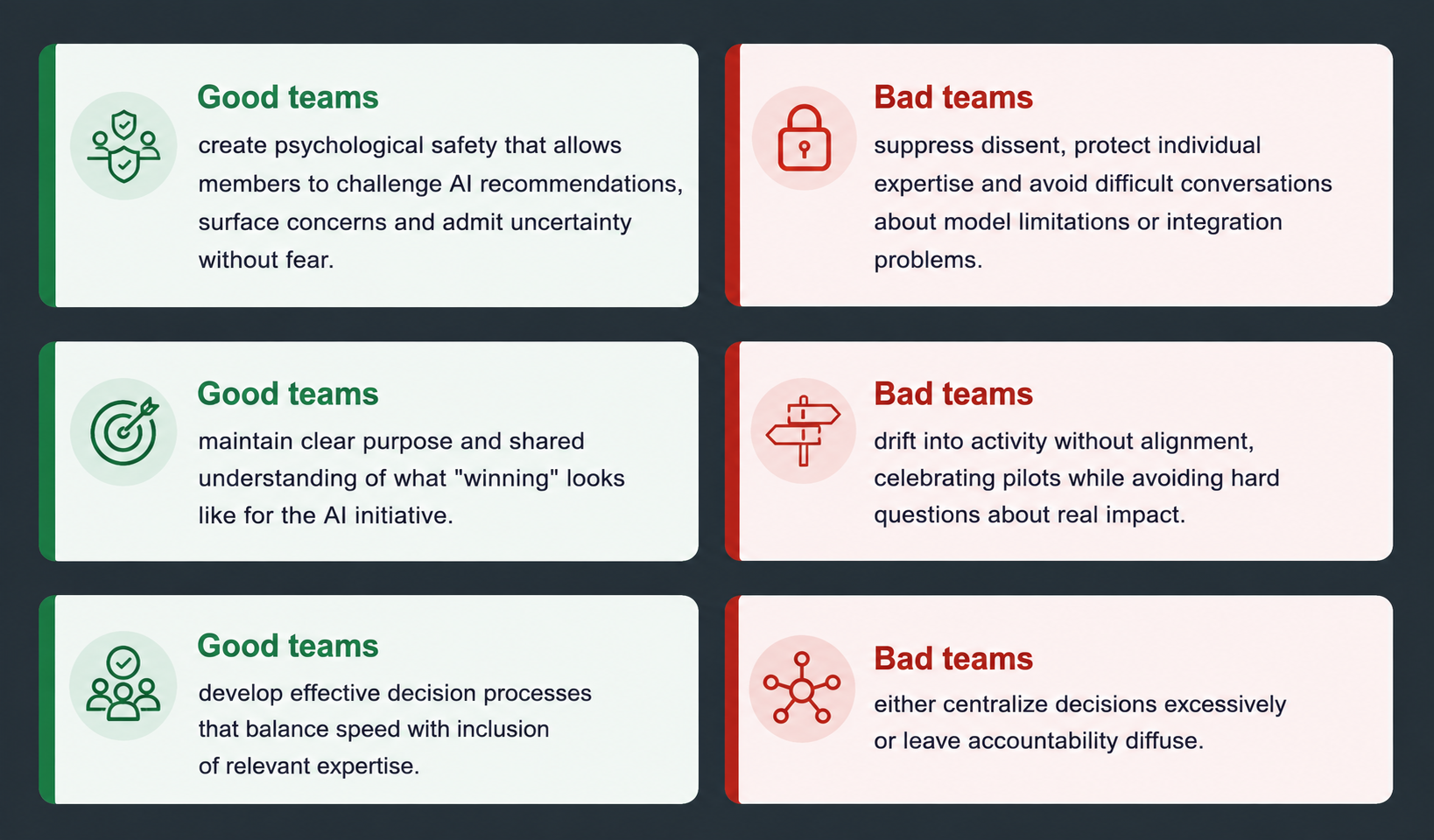
Thurber and Miller's distinctions translate directly to industrial AI: good teams create psychological safety and clear purpose; bad teams suppress dissent and drift into activity without alignment, the same activity trap named in Part I of this week's set.
Leaders can deliberately shape team quality, through selection, explicit purpose, facilitation skill and regular effectiveness reviews, treating both human judgment and machine recommendations as provisional, never as final authority.
1. Why Team Quality Matters More in AI Environments
An AI Agent doesn't fix a bad team. It gives a bad team a faster way to be wrong together.
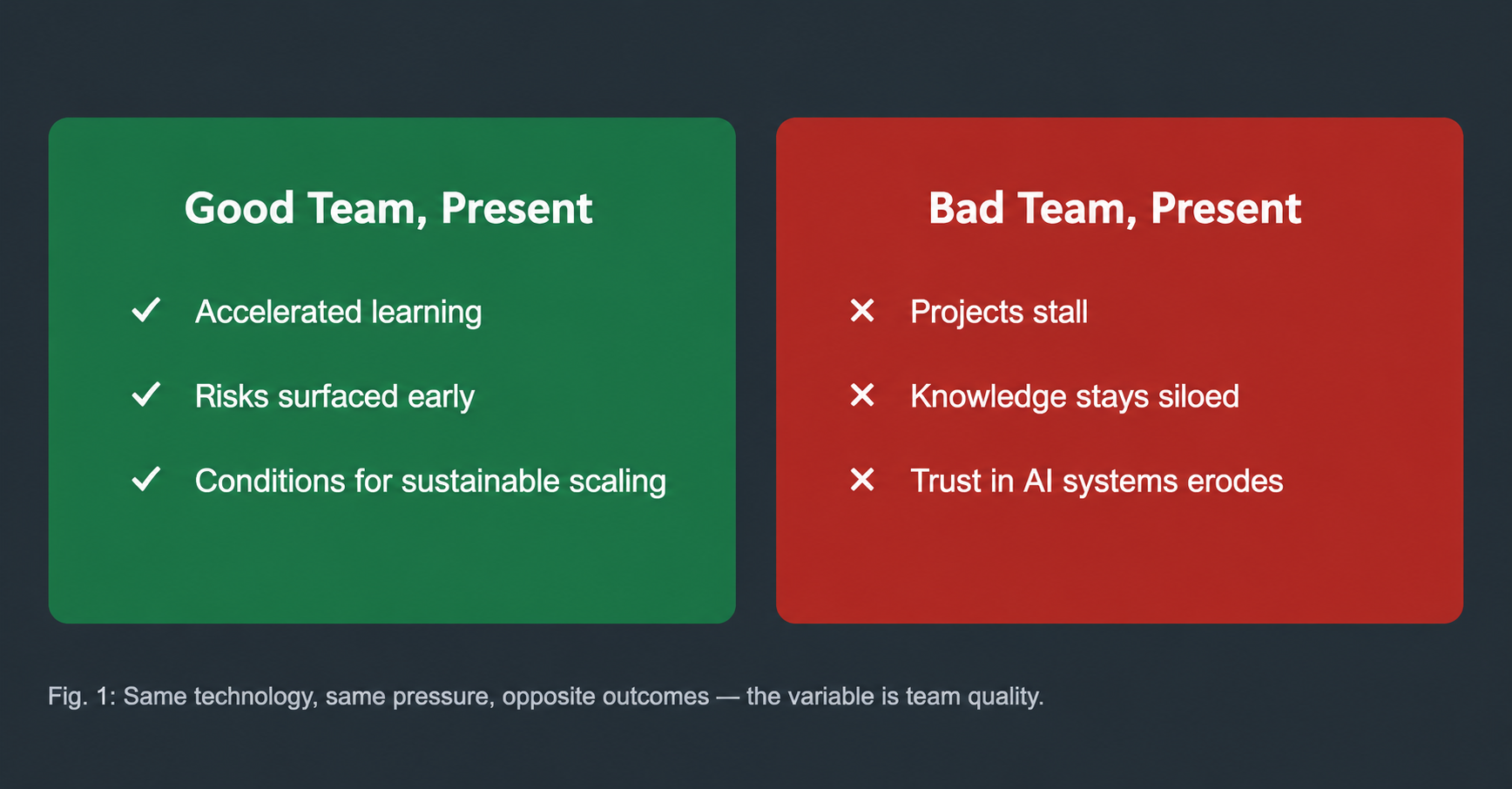
Physical AI projects typically require people with very different backgrounds and mental models to work closely together under time pressure and uncertainty. When these teams function poorly, projects stall, knowledge remains siloed and trust in AI systems erodes. When they function well, they accelerate learning, surface risks early and create the conditions for sustainable scaling.
This series has already flagged the cost of getting this wrong at scale: Deloitte's 2026 research found that while 56% of leaders say they design AI for business outcomes, only 40% design for both business and human outcomes — fairness, skills development, the day-to-day experience of work (Deloitte, 2026 — see Week 33). Team quality is where that gap becomes concrete: it's the difference between a project that surfaces its own risks and one that hides them until an incident does it for them.
👉 Key Insight
Technology can amplify both good and bad team dynamics. The quality of the human team often determines whether AI becomes an asset or a source of friction.
2. Key Insights from Good Team | Bad Team Applied to Industrial AI
Drawing on Thurber and Miller's practical distinctions:
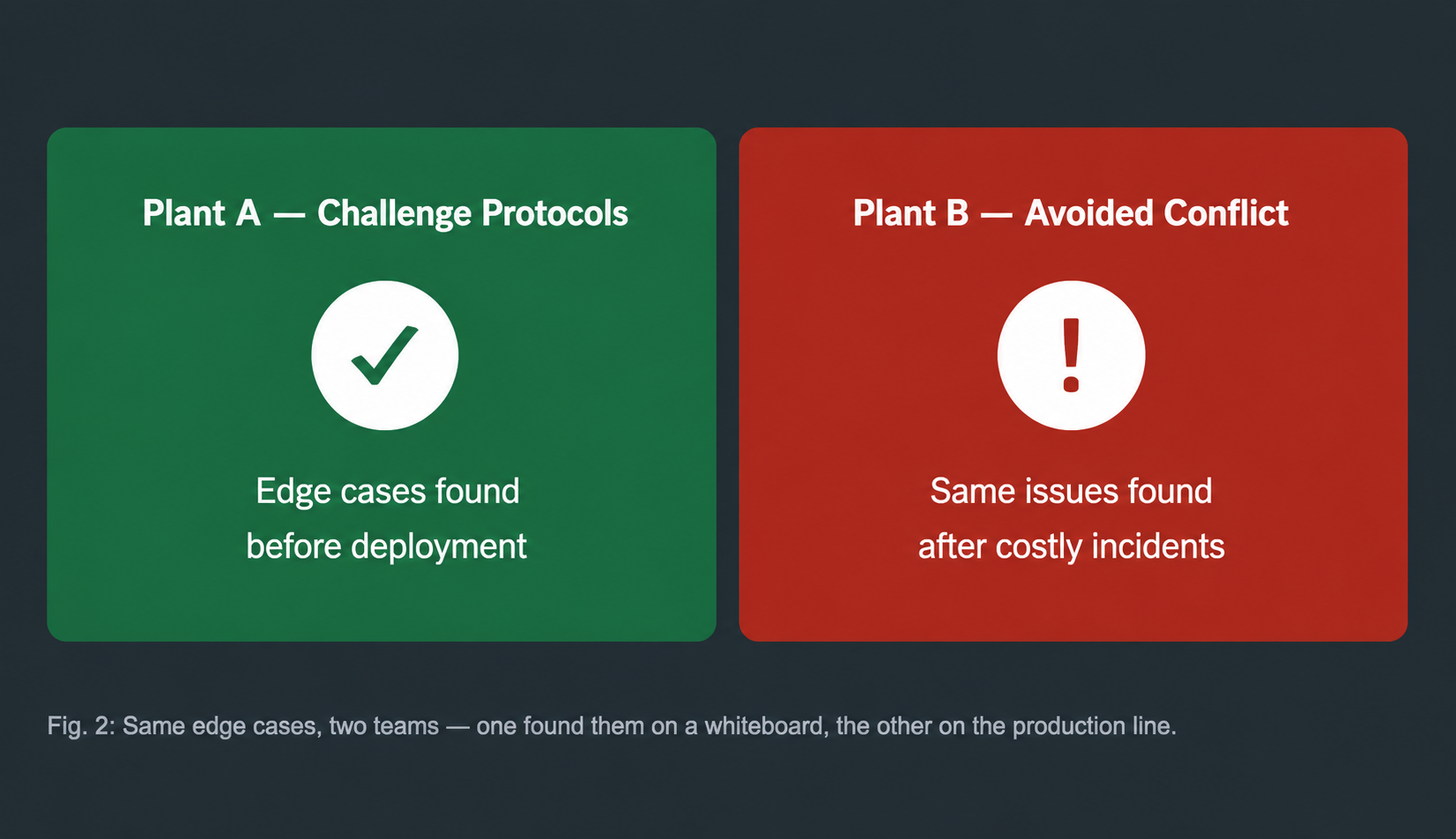
Practical example: In one manufacturing organization, a cross-functional AI team that deliberately practiced "challenge protocols", structured ways to question agent recommendations, identified several high-risk edge cases before deployment. A parallel team in another plant that avoided conflict discovered the same issues only after costly production incidents.
👉 Key Insight
Good teams and bad teams rarely differ in expertise. They differ in whether disagreement is allowed to surface before deployment, or only after an incident forces it into the open.
3. Building Good Teams for Human–AI Collaboration
Good teams aren't found. They're built, deliberately, and usually against the organization's natural habits.
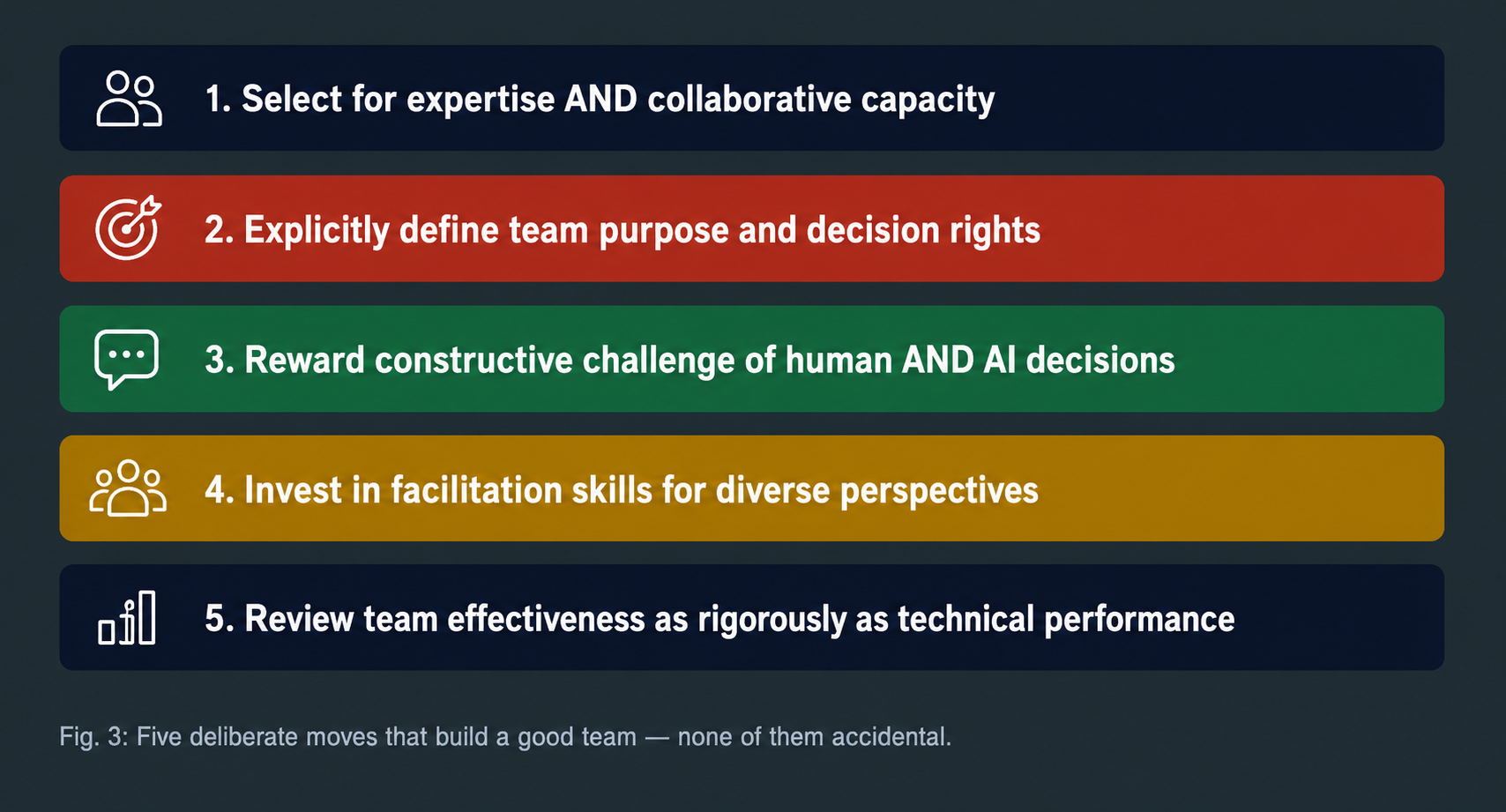
Leaders can actively shape team quality by:
Selecting members for both expertise and collaborative capacity
Explicitly defining team purpose and decision rights
Creating norms that reward constructive challenge of both human and AI decisions
Investing in facilitation skills so that diverse perspectives are productively integrated
Regularly reviewing team effectiveness with the same rigor applied to technical performance
Week 34 of this series named the capability requirement this addresses directly: successful companies deliberately develop "AI supervision" skills among experienced operators and build cross-functional teams that combine process expertise with data and safety competence, rather than relying solely on external data scientists (see Week 34, Part III). What Thurber and Miller add is the operating model for building that team well, not just staffing it correctly, but giving it the purpose, safety and decision rights to actually function.
👉 Key Insight
Good teams in AI environments treat both human judgment and machine recommendations as provisional and subject to scrutiny, never as final authority.
Action Plan for Decision Makers
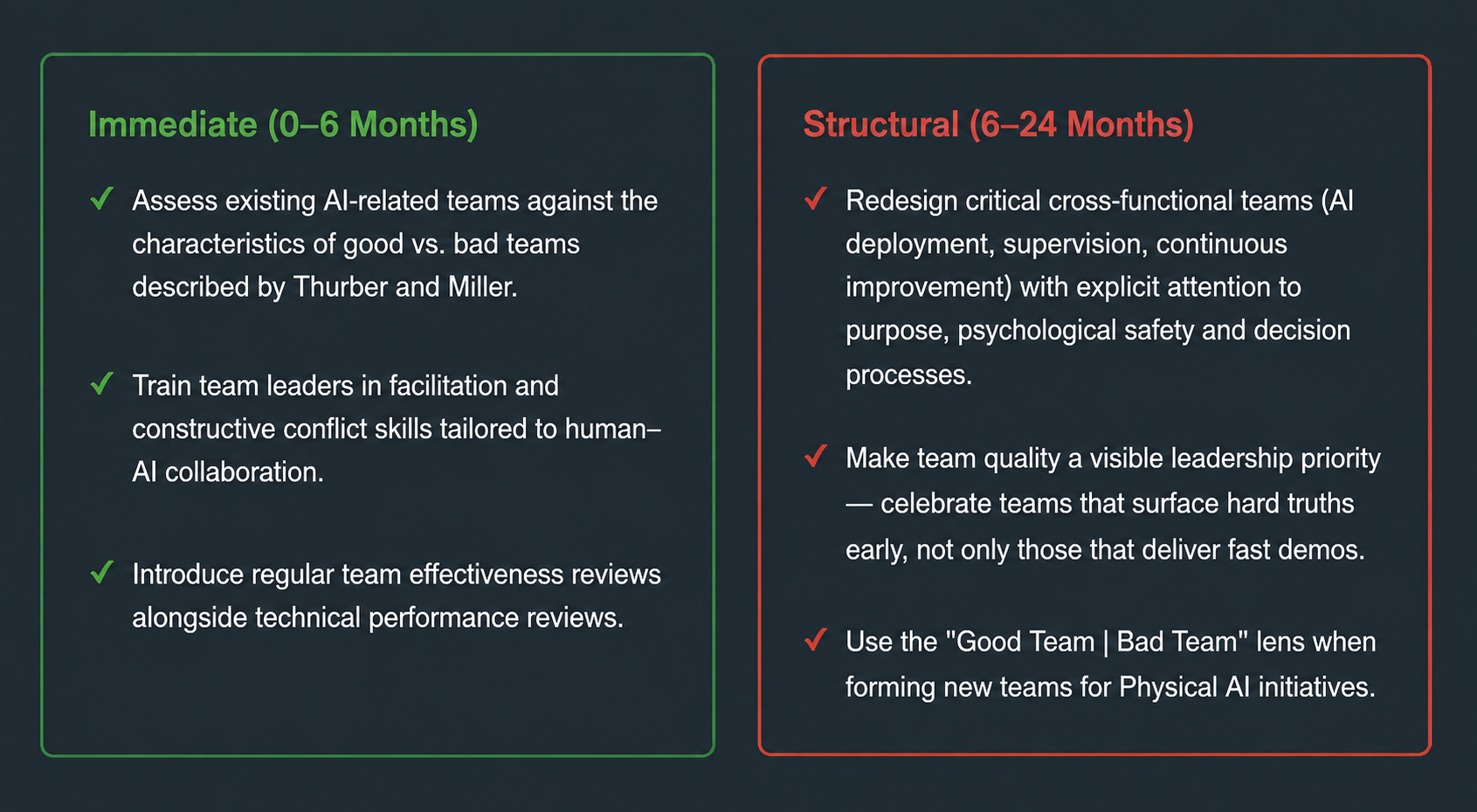
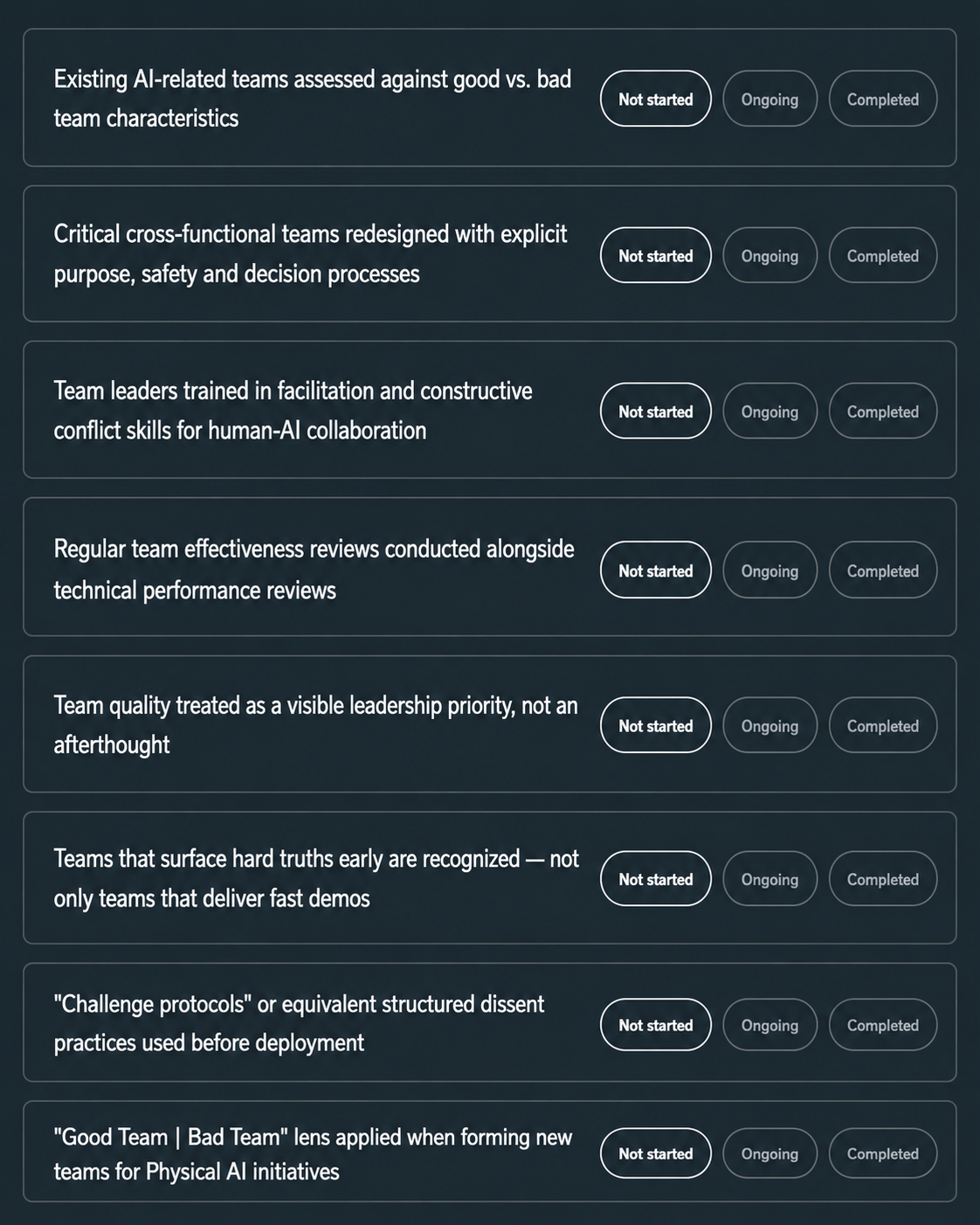
Checklist
Final Thought
This Week 35 set traced one idea through three layers: the trap of mistaking activity for progress, the systems view that shows why fixes ripple sideways, and the team dynamics that determine whether anyone notices in time. None of the three is optional. A great team using a linear mental model will still miss emergent failures. A systems-literate leader on a bad team will still get overruled or ignored.
Efficiency Before Fuel. Ownership as Design.
Systems don't fail. Decisions do.
Take the Next Step
Subscribe to the Weekly Punch for weekly strategic clarity, direct to your inbox.
References
Deloitte (2026) Decision-Making with AI. Deloitte Insights, 2026 Global Human Capital Trends.
Thurber, S. and Miller, B. (2024) Good Team, Bad Team: Lead Your People to Go After Big Challenges, Not Each Other. Vancouver: Page Two.
Disclaimer: This article applies the Good Team | Bad Team framework (Thurber & Miller, 2024) and publicly available research current as of publication. The practical example in Section 2 is an illustrative composite, not a verified named case study. Verification Gate:flagged for pre-publication source check.
Ownership as Design.
Note: This article reflects my personalviews based on industry experience and publicly available information. It does not constitute professional, legal, or investment advice and does not represent the views of my employer. AI-generated visuals, concept and content by the author.
