Local Robotics Optimization Makes the Plant Slower — Leadership Lessons from Goldratt's The Goal
LEADERSHIP | THEORY OF CONSTRAINTS | SEPTEMBER 2026 | Week 38 · Part III
Why Maximizing Robot Utilization Can Reduce Throughput, and How Constraint Thinking Changes What Leaders Should Optimize
Every few weeks, this series pauses the technology conversation to borrow a proven leadership book and apply it directly to organizations scaling Physical AI. This time it's a management classic decades older than Physical AI itself: Eliyahu Goldratt's The Goal, and its argument that a busy machine and a productive plant are not the same thing.
Efficiency Before Energy has always meant asking what actually matters before spending the resource. Goldratt asked the same question about machine time forty years before robots made it urgent again.
Executive Summary
IN 60 SECONDS:
The Goal argues that the purpose of a plant is to make money by increasing throughput while controlling inventory and operating expense. The practical method is the Theory of Constraints: find the bottleneck, subordinate everything else to it, then elevate it.
Robotics programs often do the opposite. They maximize robot uptime, cell OEE and local cycle time, and accidentally starve or block the real constraint. The plant looks more automated and gets slower.
Goldratt's lesson for Decision Makers is blunt: do not ask whether a robot is busy. Ask whether the system's constraint is producing more of what the market will pay for.
1. The Leadership Error: Local Optima
Every department tries to look efficient. That instinct is precisely what breaks the plant.
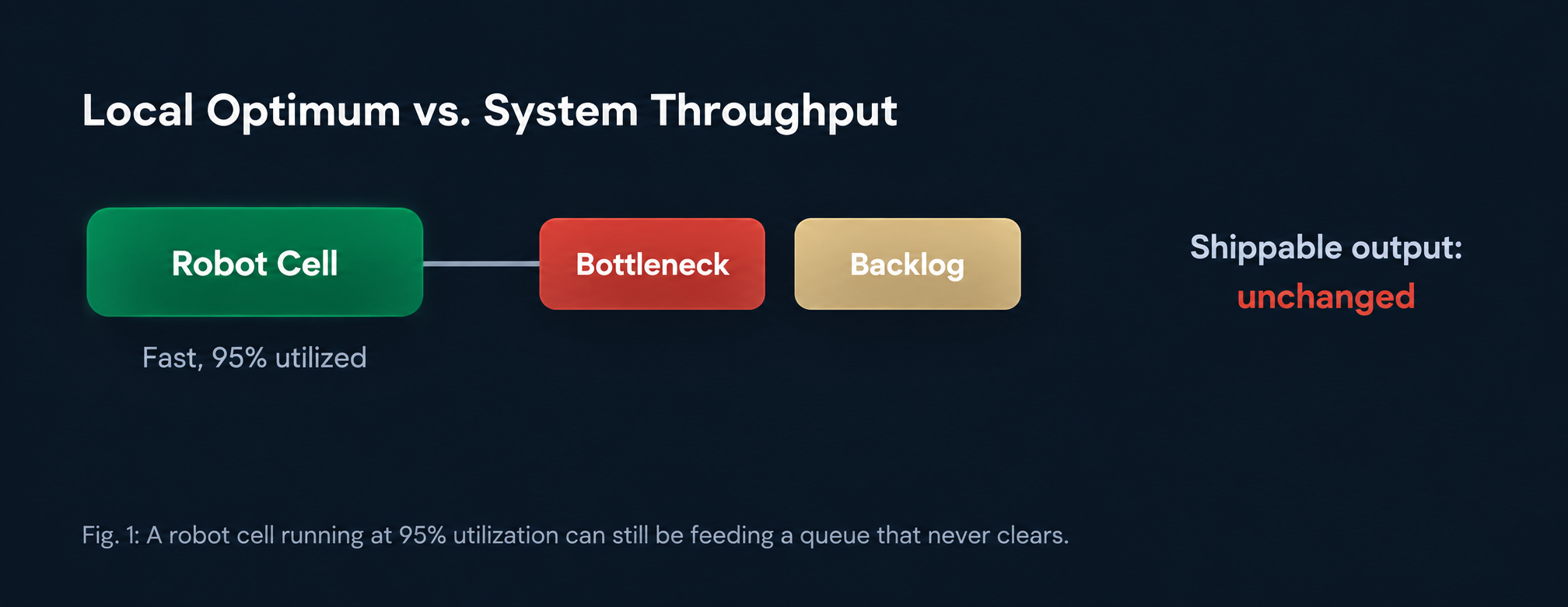
Goldratt's plant stories turn on a simple mistake: every department tries to look efficient. Non-constraint machines run full, inventory piles up, the bottleneck waits or is flooded. Robotics repeats the pattern with better hardware. A cell with three new arms can finish work faster than the downstream test station or the packing constraint can absorb. Utilization of the robots rises. Throughput of the plant does not.
This is the exact trap the book was written to name: a resource running at 100% utilization when it isn't the constraint doesn't add a single unit of shippable output, it adds inventory, handling and the appearance of progress. Robots make that appearance more convincing than ever, because a fast, humming cell photographs well for a steering deck even while the plant's actual output stays flat.
👉 Key Insight
A busy robot at a non-constraint is not progress. It is expensive inventory in motion.
2. Applying The Goal to a Robotics Decision — Practical Example
Excellent pilot report. Falling on-time output. Same factory.
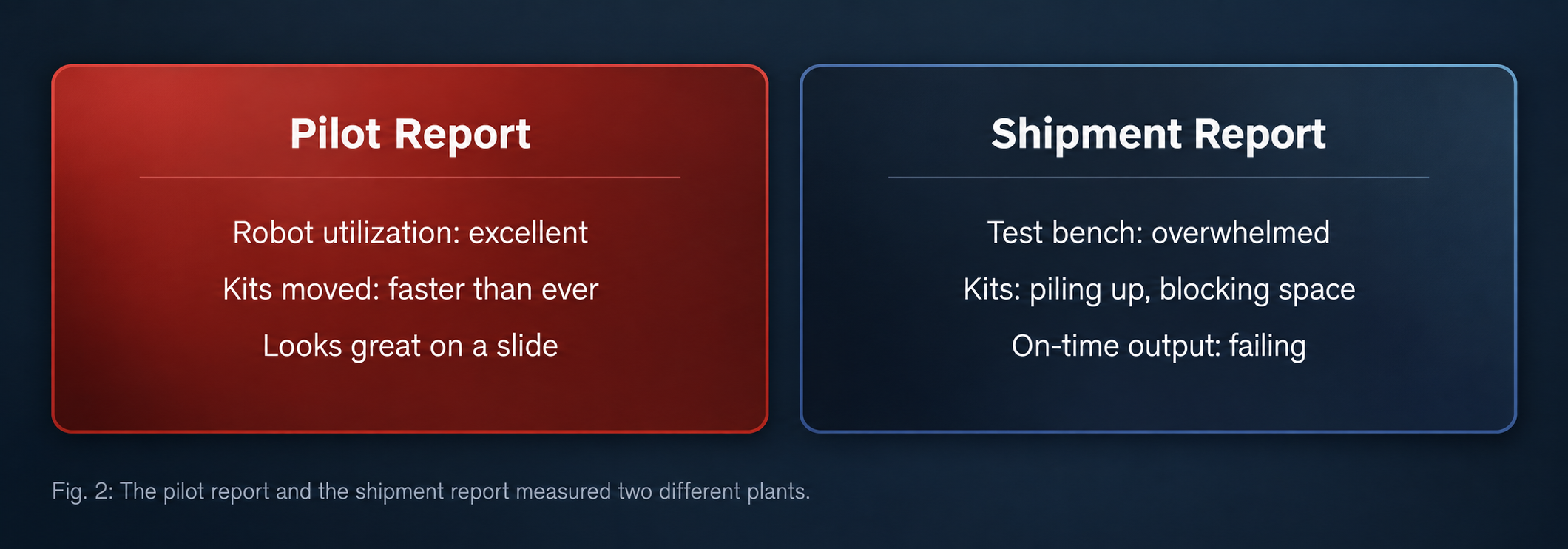
A factory buys AMRs and two humanoid pilots to "remove walking waste" in kitting. The robots move kits faster to Line A. Line A is not the constraint. Final assembly and a single test bench are. Kits arrive early, block space, and create extra handling. Robot utilization looks excellent in the pilot report. On-time output falls.
1. Identify the constraint
Test bench capacity and changeover — not the kitting station everyone was watching.
2. Subordinate robotics to that constraint
Robots feed the bench just-in-time, not as fast as possible.
3. Elevate the constraint
Faster changeover, better fixture, perhaps automation at the bench itself.
4. Only then spread robots to other steps
Once the bench is no longer starving or flooding, extend automation outward from it.
The leadership move is to stop celebrating local robot KPIs and start celebrating constraint throughput.
👉 Key Insight
The pilot report and the shipment report measured two different plants. One measured how busy the robots looked. The other measured how much the customer actually got.
3. What Changes for Leaders and Organizations
None of this argues against automation. It argues against automation that nobody pointed at anything in particular.
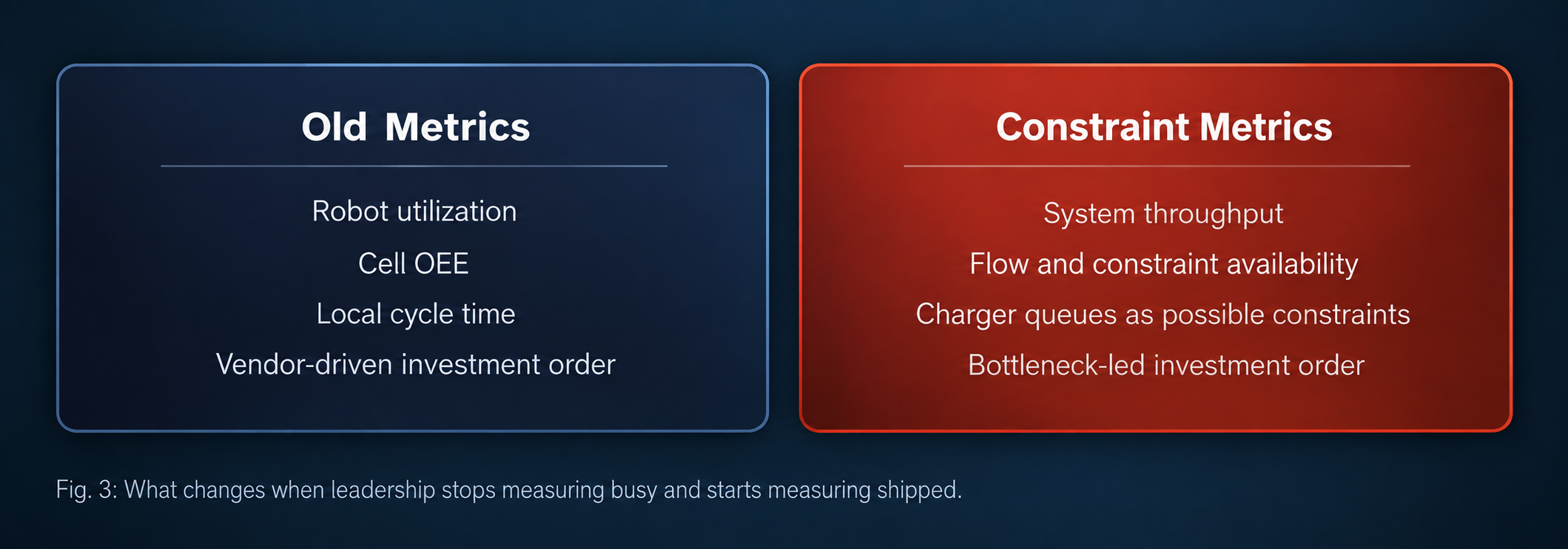
Metrics shift from robot utilization and cell OEE to system throughput, flow and constraint availability. Investment sequence follows the bottleneck, not the vendor demo. Energy and charging, the "second load" this series named in Parts I and II of this week's set, are treated as possible new constraints: a charger queue can become exactly the bottleneck the book warned about. Cross-functional leadership owns the system; cell owners no longer optimize in isolation.
This is not a call to slow down. It is a call to point automation at the one place in the plant where speed actually turns into revenue.
👉 Key Insight
The Goal does not say "don't automate." It says automate in the service of the constraint, or automation will hide the problem behind impressive local numbers.
Action Plan for Decision Makers
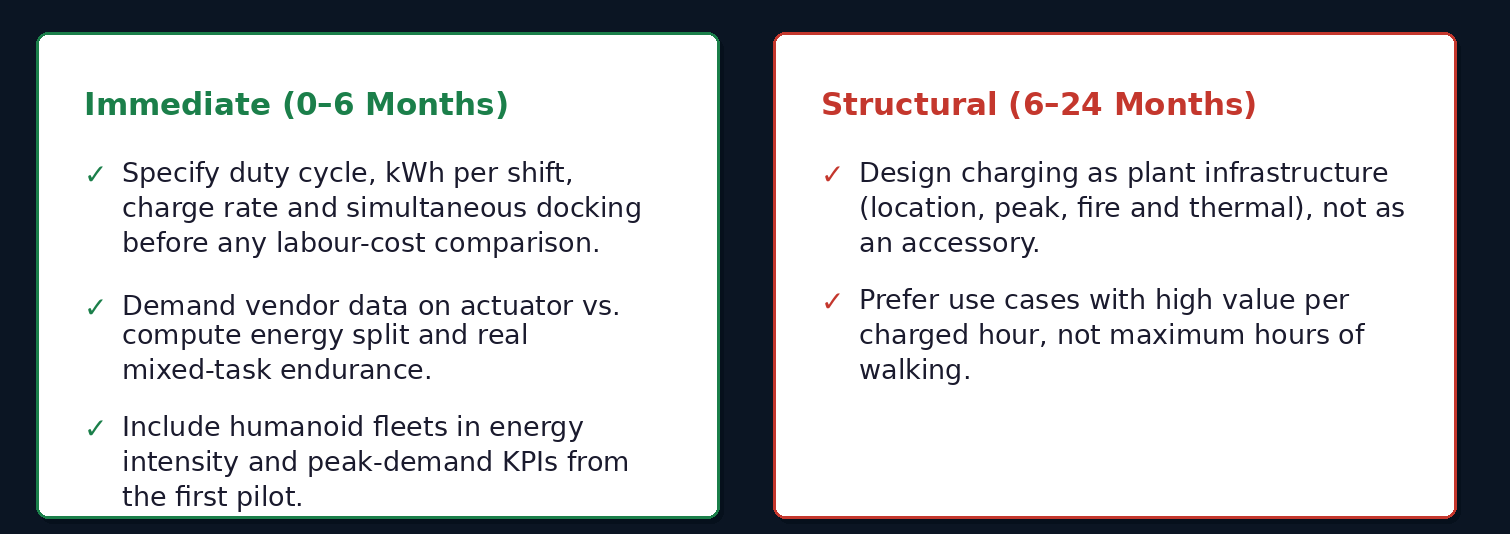
Checklist
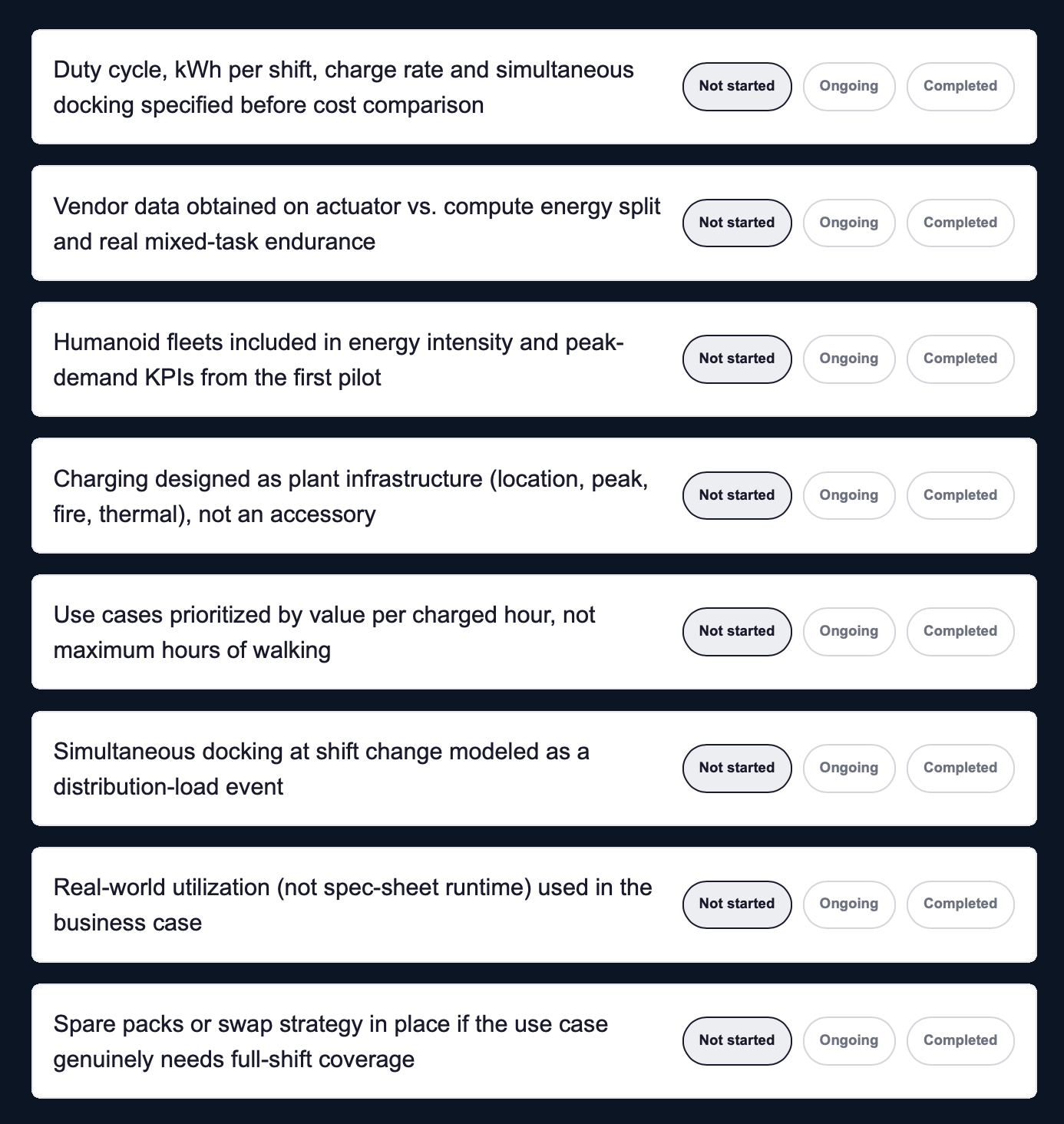
Final Thought
A robot cell running at 95% utilization can still be the reason a plant misses its shipment date. Goldratt's answer isn't to slow down automation, it's to point it at the one constraint that actually decides how much the plant sells. Everything else is expensive motion.
Efficiency Before Energy. Ownership as Design.
Systems don't fail. Decisions do.

Take the Next Step
Subscribe to the Weekly Punch for weekly strategic clarity, direct to your inbox.
References
Goldratt, E.M. and Cox, J. (1984) The Goal: A Process of Ongoing Improvement. Great Barrington, MA: North River Press.
Disclaimer: This article applies the Theory of Constraints framework from The Goal (Goldratt & Cox, 1984) to robotics deployment decisions. The practical example in Section 2 is an illustrative composite, not a verified named case study. Verification Gate: flagged for pre-publication source check.
Ownership as Design.
Note: This article reflects my personalviews based on industry experience and publicly available information. It does not constitute professional, legal, or investment advice and does not represent the views of my employer. AI-generated visuals, concept and content by the author.
