The Role of Energy Infrastructure in Scaling Physical AI
PHYSICAL AIENERGY INFRASTRUCTUREJUNE/JULY 2026
ENERGY DOMINANCE · WEEK 27 · PART II
From Centralized Data Center Power to Distributed Factory-Level Energy Systems | Why Energy Availability, Quality and Cost Are Becoming the Decisive Bottleneck for Widespread Physical AI Deployment
This is Part II of Week 27 the critical infrastructure perspective after exploring the differences between Generative and Industrial AI: without the right energy foundation at factory and edge level, even the best Physical AI systems cannot scale beyond pilots.
Part I drew the line between AI that produces content and AI that must act safely in the physical world. Acting in the physical world has a cost the chatbot never paid: power, continuous, local, high-quality power, at hundreds of points where there was none before. The conversation has fixated on chips and models. The constraint quietly forming underneath is the wall socket.
This is exactly where Efficiency Before Fuel earns its keep. The reflex is to add more compute and more robots, more "fuel." But on a real factory grid, capability you cannot reliably power, at a cost that survives a European electricity bill, is capability you cannot scale. The energy foundation comes first. Build it well, and Physical AI becomes not only deployable but a net contributor to energy efficiency itself.
Executive Summary
1. The Shift in Energy Demand: From Centralized Training to Distributed Physical Deployment
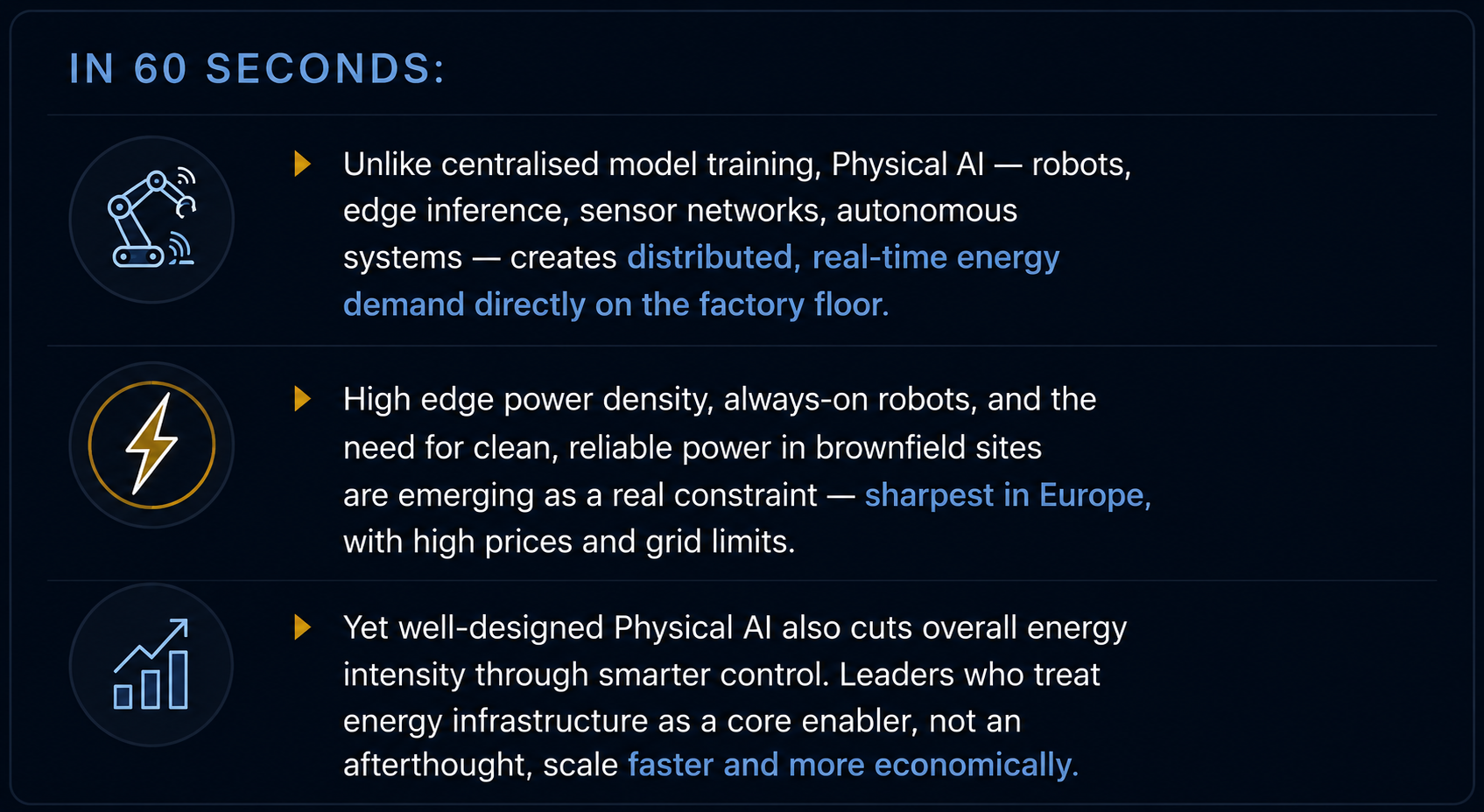
The hook: Training a foundation model is one enormous, predictable load in a purpose-built hall. Running Physical AI is a thousand small, fussy loads scattered across a building that was wired for something else entirely.
The mechanism: Training is extremely energy-intensive but highly centralised. Deployment spreads demand across many smaller, always-on systems: edge servers running inference, robot controllers, sensor networks, vision systems, and actuators. These often require high power quality, stable voltage and frequency, and low latency, which makes them sensitive to grid fluctuations. In many factories, the existing electrical infrastructure was simply never designed for clusters of high-density edge AI or fleets of energy-consuming robots running in parallel.
The evidence: The 2026 industrial-AI reference designs from Siemens, NVIDIA and others increasingly treat power distribution, quality, and local resilience as first-class design inputs, not facilities line items bolted on after the use case is chosen.
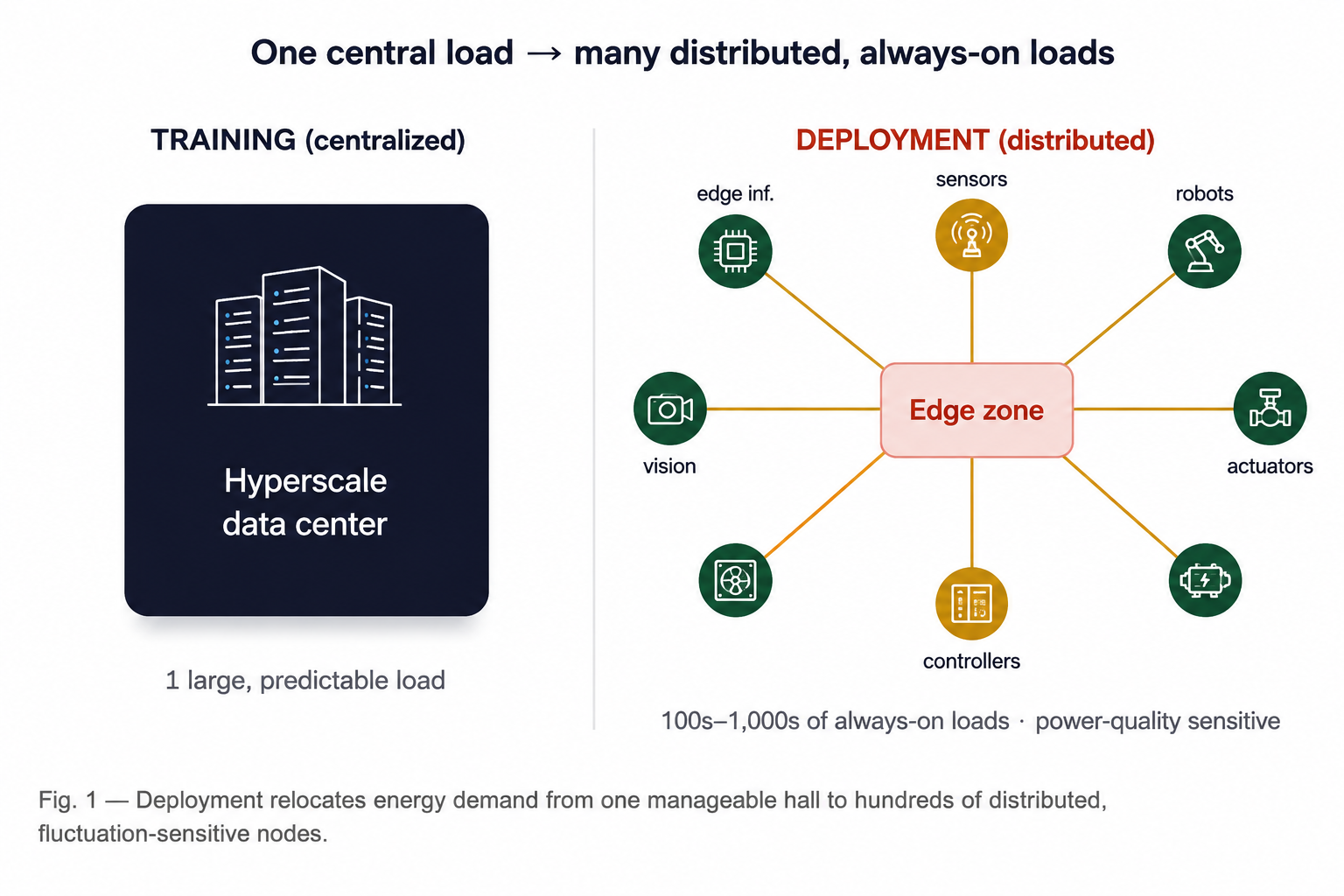
👉 Key Insight: Physical AI moves energy demand from the (relatively manageable) data center to hundreds or thousands of points across the factory, creating new requirements for local capacity, power quality, and resilience.
2. Key Energy Infrastructure Challenges for Scaling Physical AI
The hook: Each challenge alone is solvable. Together, they decide whether a successful pilot becomes a plant-wide rollout or a stranded proof of concept.
The mechanism: Five infrastructure pressures converge on every scaling decision:
· Power availability & grid connection: adding significant new load often means long lead times and high costs for grid upgrades.
· Power quality & reliability: edge AI and robotics tolerate voltage sags, harmonics and outages far less than traditional automation.
· Energy cost & carbon intensity: in Europe, high, volatile prices plus tightening carbon reporting make always-on operating cost a major ROI factor.
· On-site generation & storage: CHP, solar-plus-battery and microgrids buy resilience and cost control, but add complexity and capital.
· Cooling at the edge: even efficient hardware sheds heat that must be managed locally, in buildings never designed for dense compute.
The evidence: European industrial energy-price and grid-constraint studies through 2025–2026 consistently flag connection lead times and price volatility, not hardware availability, as the gating factors for energy-intensive automation.
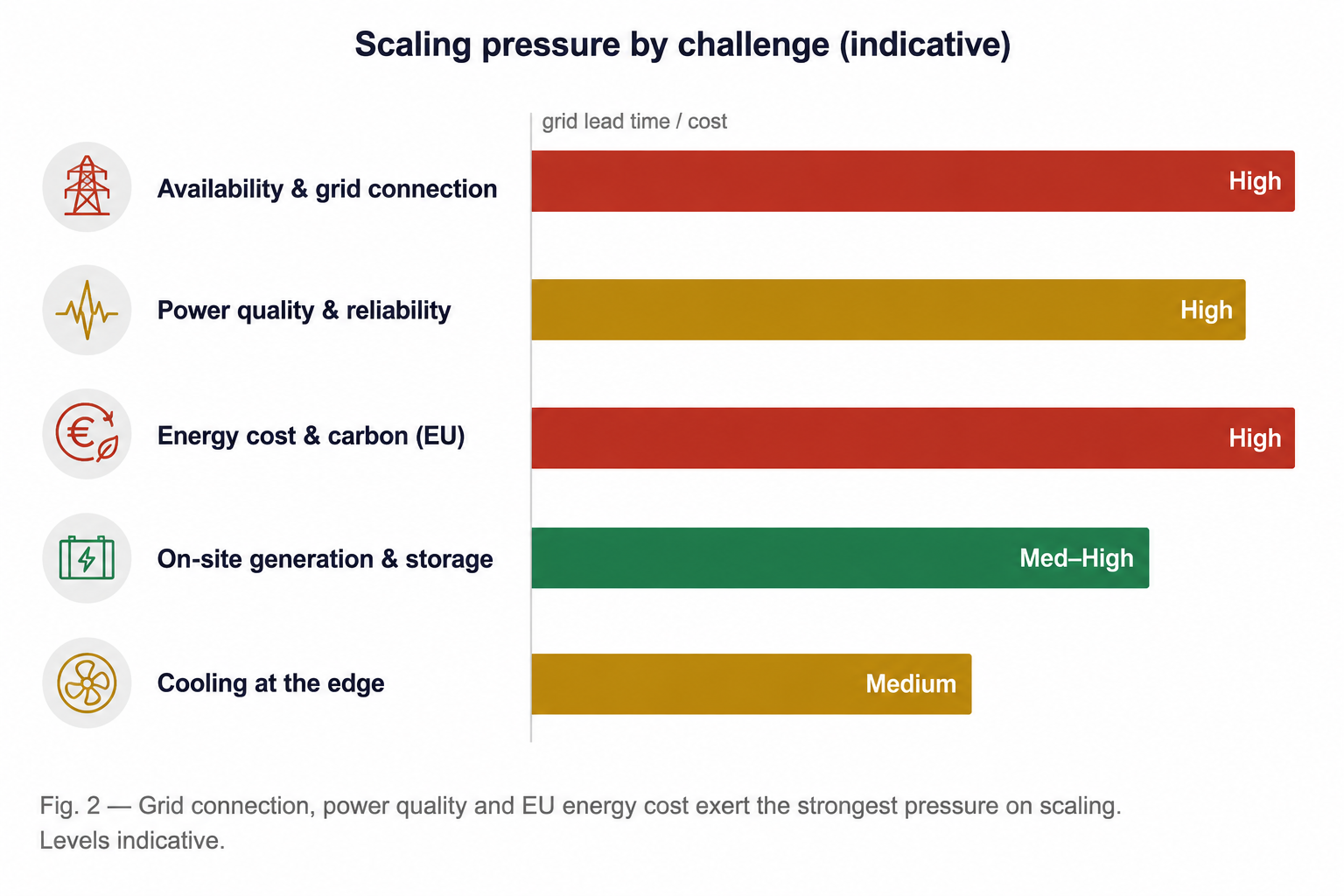
👉 Key Insight: Energy infrastructure is no longer just a utility cost. it is becoming a strategic design parameter for Physical AI roadmaps.
3. Quantified Perspectives and the Dual Role of Physical AI
The hook: The honest question is not "does Physical AI use energy?", it does. It is "does the energy it saves exceed the energy it draws?" In the right use cases, the answer is decisively yes.
The mechanism: Physical AI consumes power, but the intelligent control and optimisation it enables can deliver net energy savings, through reduced scrap, optimised machine operation, better scheduling, and predictive maintenance that avoids inefficient running states. In high-energy-intensity industries, the savings potential often outweighs the incremental consumption of the AI systems themselves, provided the infrastructure can support reliable operation.
The evidence: European manufacturers are most sensitive to this equation, given price levels and decarbonisation targets. The successful early deployments pair efficient edge hardware, including photonic approaches where applicable, with strong process-optimisation use cases, rather than chasing automation for its own sake.
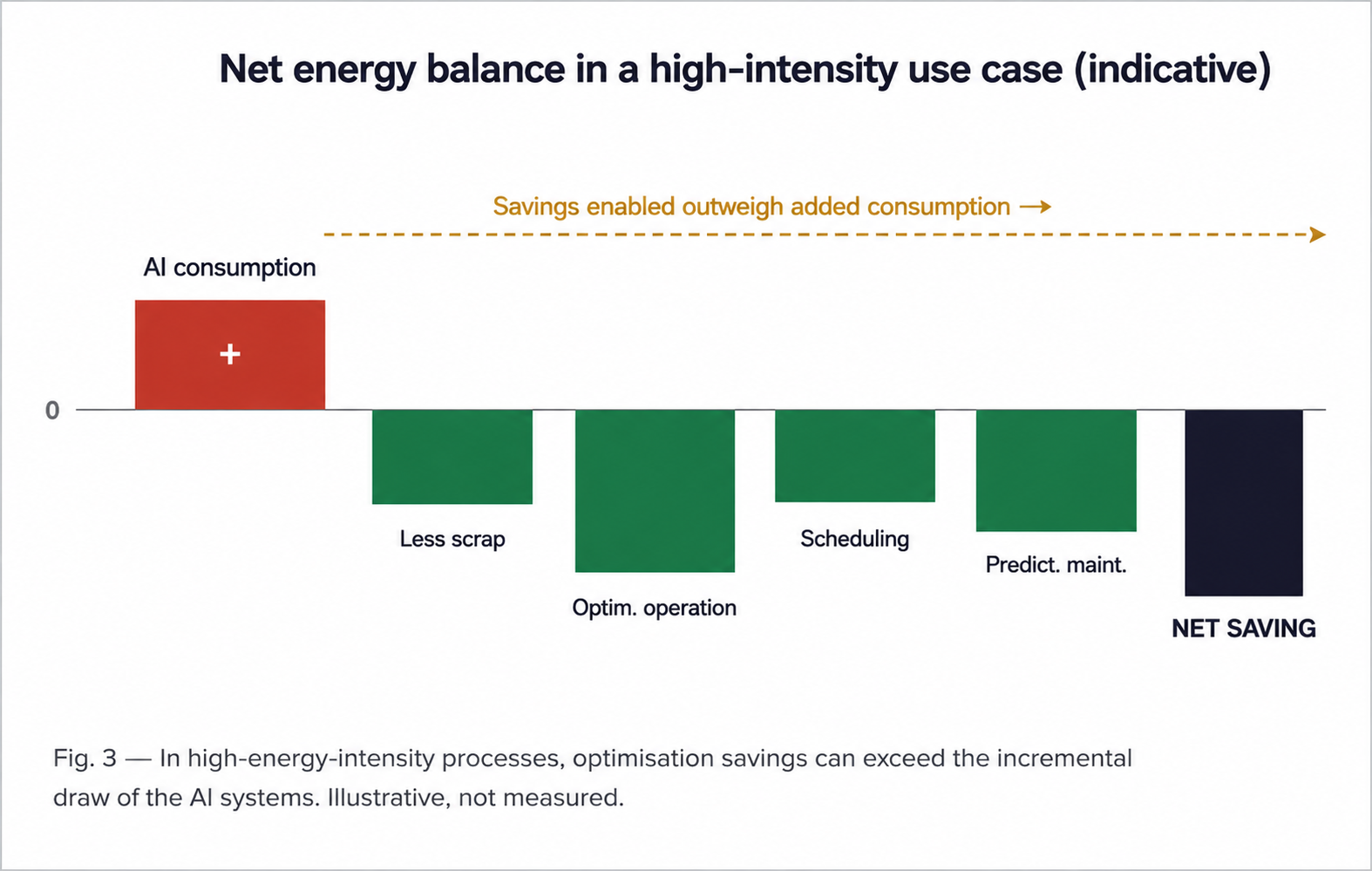
👉 Key Insight: Physical AI is both a new energy consumer and a powerful tool for energy reduction. The net impact depends heavily on infrastructure quality and use-case selection.
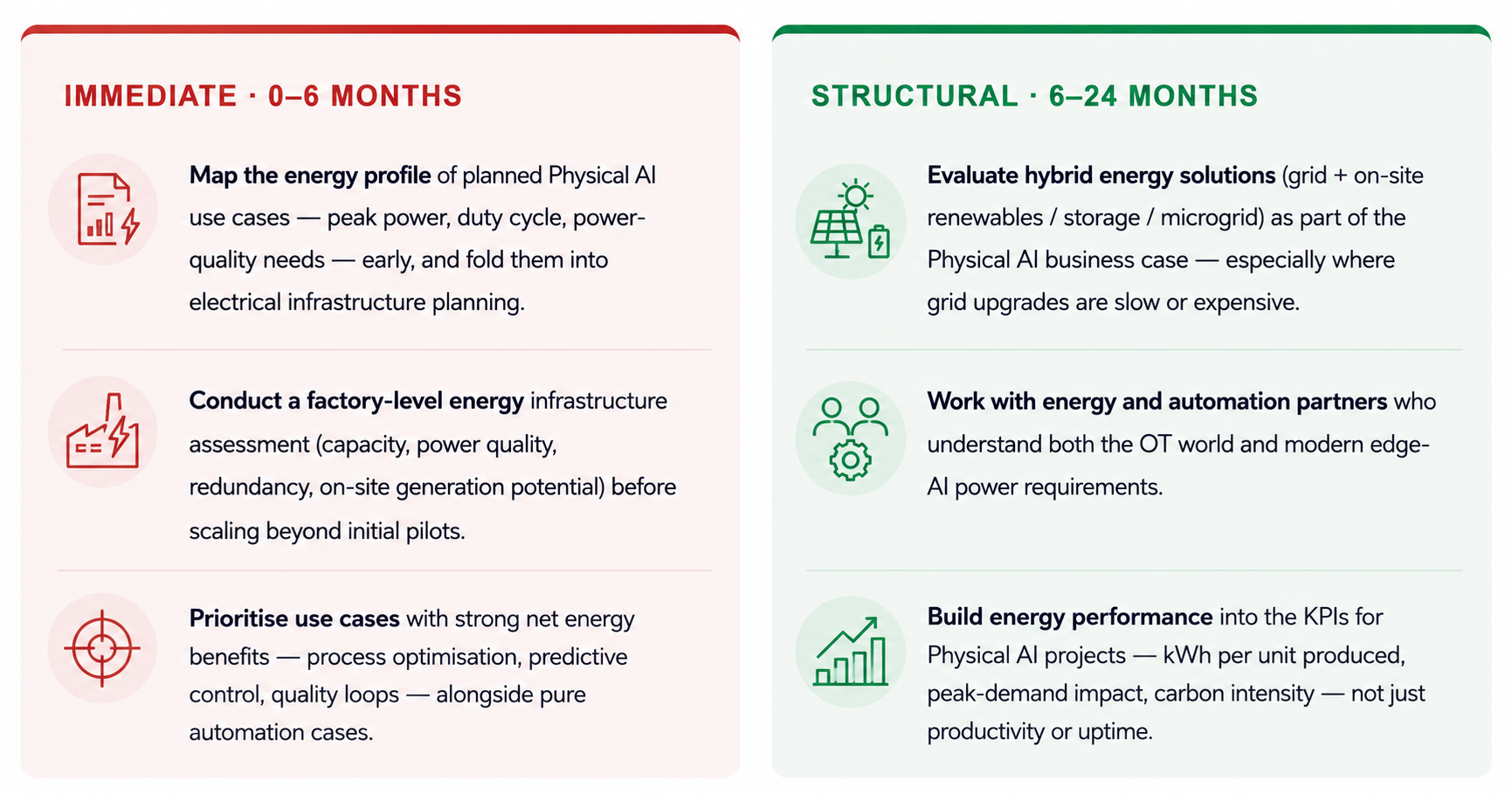
Action Plan for Decision Makers
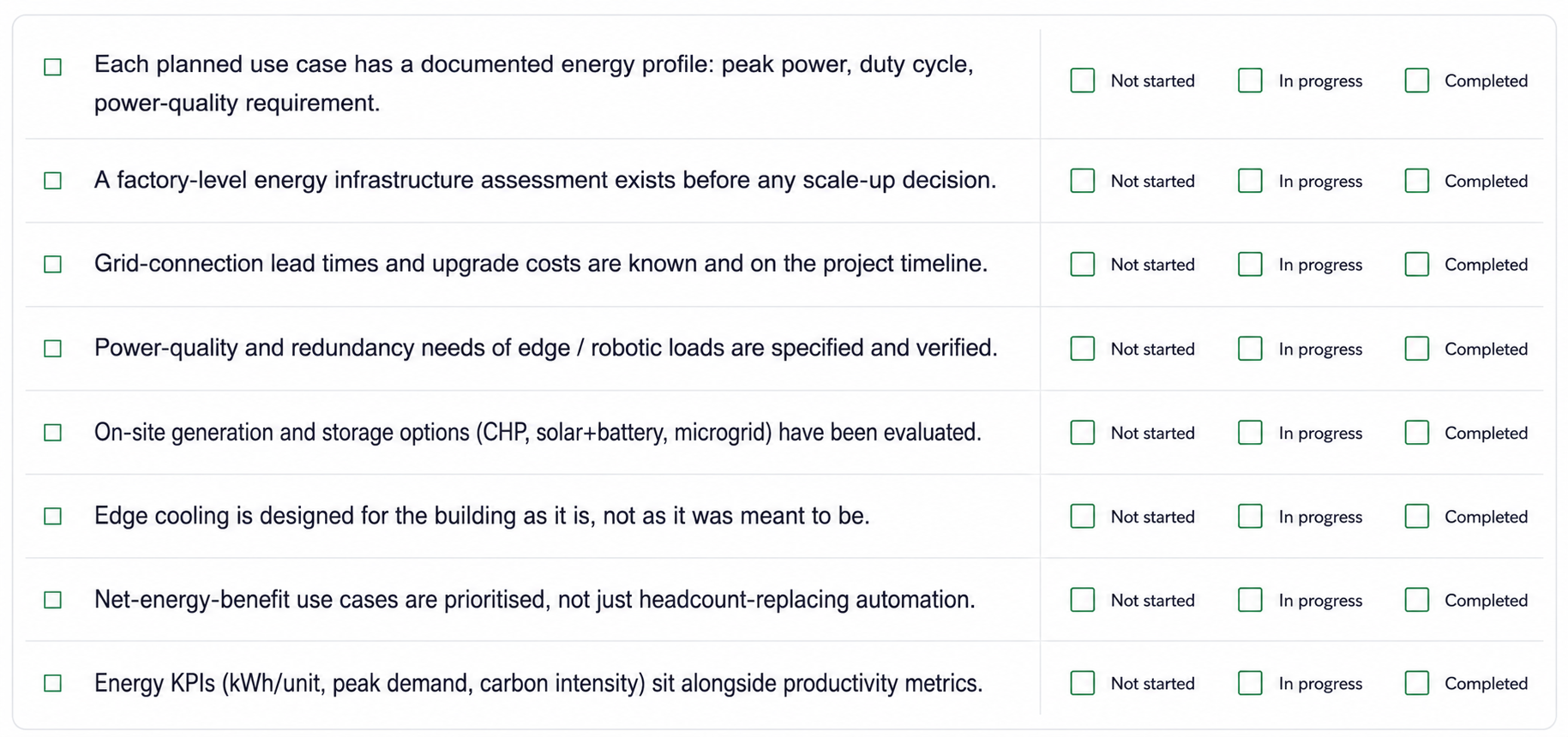
Readiness Checklist
Final Thought
Week 27 began by separating intelligence that thinks from intelligence that acts. It ends at the wall socket — because action in the physical world runs on power, and power is exactly where Europe's manufacturers are most constrained. The organisations that will scale Physical AI are not those with the largest models. They are those that engineered the energy foundation first, then let the AI pay it back in efficiency.
Treat energy as a facilities afterthought and Physical AI stays a pilot. Treat it as core design — capacity, quality, on-site generation, energy KPIs — and the same systems become both deployable and a lever for decarbonisation. Efficiency before fuel is not a slogan here. It is the difference between a proof of concept and a moat.
Systems don't fail. Decisions do.
Is your energy foundation ready for Physical AI?
First: Take your most promising Physical AI use case and answer three questions — what is its peak power and duty cycle, can your site deliver clean power reliably, and does it save more energy than it draws? If you cannot answer all three, that is your starting point.
Then: Bring energy and automation to the same table before the next pilot — not after it scales. Share this with the colleague still treating the factory grid as a fixed given rather than a strategic design choice.
Take the Next Step
Subscribe to the Weekly Punch for weekly strategic clarity, direct to your inbox.
References
Siemens & NVIDIA (2026) Industrial AI initiatives and factory energy considerations.
International Energy Agency (2026) Data center vs. edge / distributed AI energy demand, industry reports.
Capgemini Research Institute (2026) Energy-intensive manufacturing and automation ROI analyses. Capgemini.
Deloitte (2026) Automation economics and energy in manufacturing. Deloitte Insights.
European industrial energy-price and grid-constraint studies (2025–2026).
Factory case examples, automotive and process industries (2026) energy-aware Physical AI deployments.
Disclaimer: All performance ranges, comparisons and indices are indicative and based on published third-party analyses; they do not constitute investment, financial or management advice. Readers are encouraged to conduct their own verification before making governance, operational or capital-allocation decisions. The author maintains no commercial relationship with the organisations named.
© 2026 René Grywnow · Energy Dominance Series · Week 27 · Part II | Ownership as Design.
Note: This article reflects my personalviews based on industry experience and publicly available information. It does not constitute professional, legal, or investment advice and does not represent the views of my employer. AI-generated visuals, concept and content by the author.
